GPT-Rosalind Agents: Mouse-Brain Atlas Mapped in 32 Minutes
Nearly 2,000 GPT-Rosalind agents analyzed a mouse-brain CRISPR atlas in 32 minutes. The system produced literature-linked biological leads, but the proposed mechanisms still require experimental testing and peer review.
Researchers studying gene disruptions in mouse-brain cells can now consult a public atlas that connects cellular responses with scientific literature. According to Crypto Briefing, OpenAI, PerturbAI and Scripps Research deployed nearly 2,000 GPT-Rosalind agents, which completed the analysis in 32 minutes. The project was announced on Oct. 21, 2026.
What data did the agents analyze?
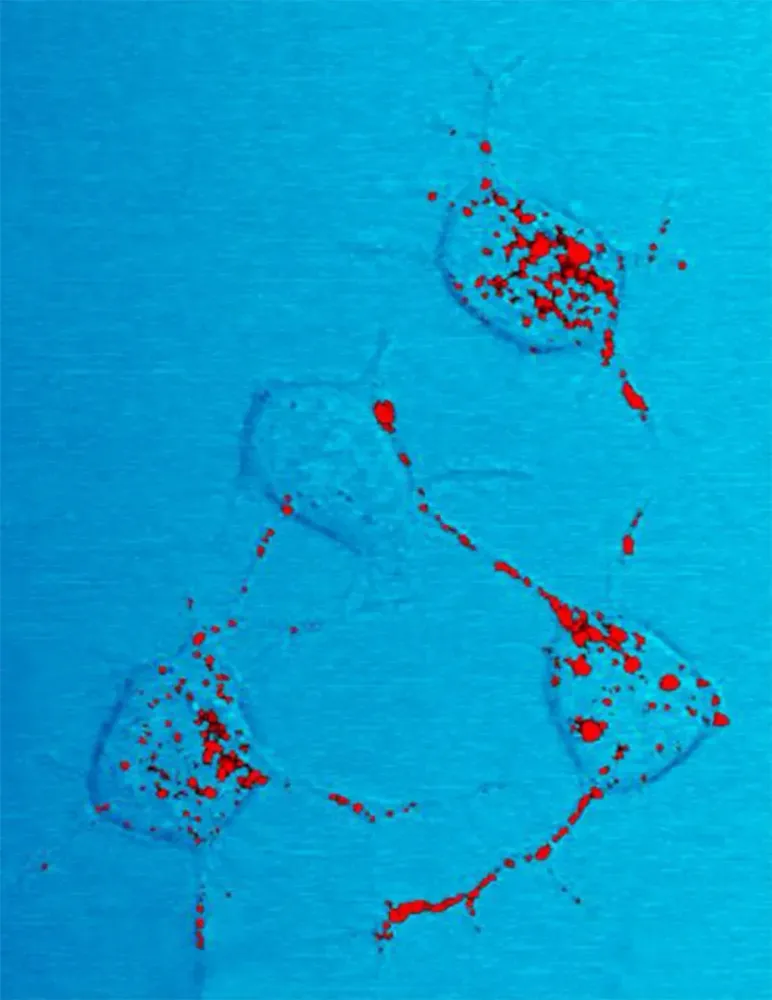
After researchers disrupted 1,947 genes associated with disease, the underlying experiment recorded how mouse-brain cells responded (TokenPost). It included data from about 7.7 million cells. By pairing CRISPR gene disruption with single-nucleus RNA sequencing, the Perturb-seq approach measured gene activity within individual cell nuclei.
Researchers had already generated those biological measurements. After reviewing the recorded responses, GPT-Rosalind matched them with scientific literature. Organized into a searchable resource, the Reasoning Atlas brings together genes, observed cell effects and earlier research.
| Measure | Reported value |
|---|---|
| GPT-Rosalind agents deployed | Nearly 2,000 |
| Analysis time | 32 minutes |
| Cells represented | About 7.7 million, according to TokenPost |
| Disease-associated genes disrupted | 1,947 |
| Expert preference for distributed reports | 75% |
| References cited by distributed agents | More than 700 |
| References cited by one agent | 11 |
| Estimated human analysis time | Several months to a year |
How did the agent system compare with a single agent?
Each agent handled one gene perturbation, analyzed the cells affected by that disruption and searched the literature for possible explanations. Citation totals exceeded 700 for the distributed system, compared with 11 for the single-agent setup.
Specialists selected the distributed agents’ reports 75% of the time in blinded reviews. The figure reflects a preference between reports; it does not show whether the proposed biological explanations are correct.
Estimates put human analysts reviewing comparable data one altered gene at a time at several months to a year. The estimate is a projection rather than the result of a timed human trial.
Which biological leads did the agents produce?
One lead concerned unexpected differences between Tsc1 and Tsc2, two genes relevant to tuberous sclerosis. The agents found differing effects in movement-related brain regions, including the cerebellum, as reported by The Decoder.
DCTN1, a gene linked to Perry syndrome, was the focus of a second line of inquiry. Increased activity in genes involved in cholesterol production was associated with disruption of DCTN1. The agents proposed cholesterol transport as a possible mechanism for researchers to investigate.
“AI could help more researchers explore these resources and turn unexpected observations into new questions to test,” — Sarah Teichmann, chair in stem cell medicine at the University of Cambridge and founding co-chair of the Human Cell Atlas.
The DCTN1 connection is still a hypothesis rather than an established drug target. Scientists would still need to test the proposed mechanism experimentally.
What is ready for researchers and agent builders to use?
The Reasoning Atlas is publicly available on GitHub. The accompanying paper is available as a bioRxiv preprint. For teams connecting repository data to agent workflows, our guide to deploying GitHub data in an MCP server covers the relevant setup. The public atlas can also serve as a structured research input for the type of environment described in our research-agent guide for a unified MCP endpoint.
The findings are not the same as a completed drug-discovery result. The preprint still requires peer review, and the proposed biological mechanisms remain unvalidated. For joint drug-target discovery, OpenAI and PerturbAI plan to work with PerturbAI’s in-vivo data.
That effort followed OpenAI’s acquisition of Orchestra Bio on Tuesday, Oct. 20, an acquisition that brought drug-program coordination software into its Rosalind life-sciences tools. No experimental-validation date is given. The current status is that the atlas and preprint are public while the proposed DCTN1 mechanism still requires laboratory testing.
Sources
- OpenAI agents analyze mouse brain data in 32 minutes, a job that would take humans months — the-decoder.com, 2026-10-22
- OpenAI uses nearly 2000 AI agents to analyze brain ... — cryptobriefing.com, 2026-10-21
- OpenAI Uses GPT-Rosalind Agents to Analyze Mouse-Brain ... — tokenpost.com, 2026-10-22